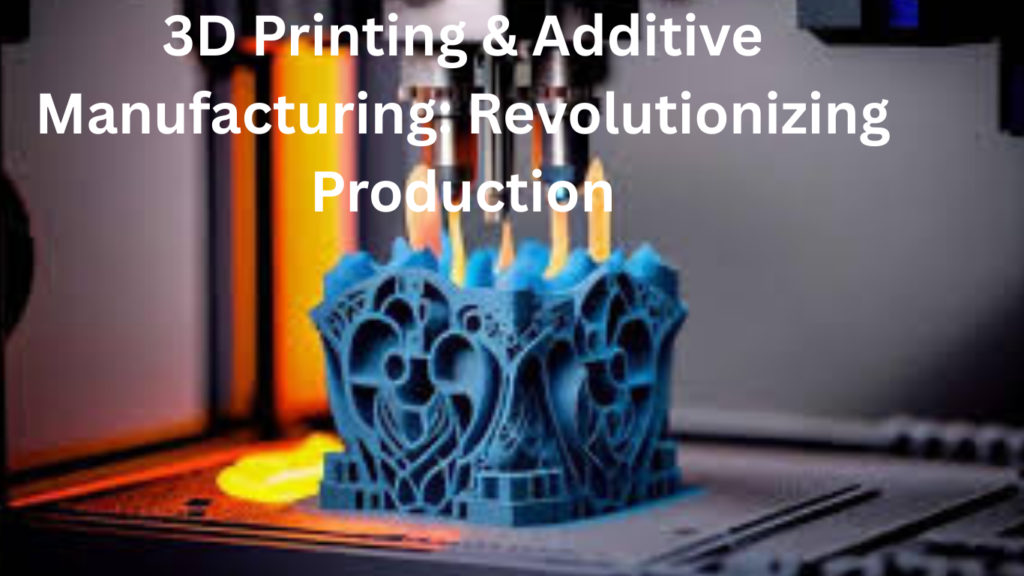
In recent decades, 3D printing, also known as additive manufacturing (AM), has transformed the way products are designed, prototyped, and manufactured. Unlike traditional manufacturing, which often relies on subtractive processes (cutting, drilling, or milling), additive manufacturing builds objects layer by layer from digital designs. This technology enables rapid prototyping, customization, and production of complex geometries that were previously impossible or highly expensive.
What Is 3D Printing & Additive Manufacturing?
3D printing is a process of creating three-dimensional physical objects from digital models using additive techniques. Material is deposited layer by layer until the final product is complete.
Additive manufacturing is the broader industrial term for 3D printing and refers to the production of functional parts and products using additive processes rather than traditional subtractive or formative methods.
The process typically begins with a Computer-Aided Design (CAD) model, which is then converted into a format (commonly STL) readable by the 3D printer.
How 3D Printing Works
- Design Creation: Engineers or designers create a digital 3D model using CAD software.
- File Preparation: The model is sliced into thin horizontal layers using specialized software.
- Printing: The printer deposits material layer by layer, following the digital design.
- Post-Processing: Printed objects may require cleaning, curing, or finishing depending on the material and application.
Different 3D printing technologies exist based on the materials and techniques used:
Types of 3D Printing Technologies
1. Fused Deposition Modeling (FDM)
- Process: Thermoplastic filaments are melted and extruded layer by layer.
- Applications: Prototyping, hobbyist projects, low-cost manufacturing.
2. Stereolithography (SLA)
- Process: Uses a laser to cure liquid resin into solid layers.
- Applications: High-resolution prototypes, dental models, jewelry.
3. Selective Laser Sintering (SLS)
- Process: Uses a laser to fuse powdered materials (plastics, metals) into solid structures.
- Applications: Functional prototypes, aerospace components, complex geometries.
4. Digital Light Processing (DLP)
- Process: Similar to SLA, but uses a digital light projector to cure resin.
- Applications: Detailed models, dental and medical devices.
5. Metal Additive Manufacturing
- Process: Includes Direct Metal Laser Sintering (DMLS) and Electron Beam Melting (EBM).
- Applications: Aerospace, automotive, and medical implants requiring strong, lightweight metals.
6. Binder Jetting
- Process: A binding agent is deposited onto a powder bed, creating solid parts layer by layer.
- Applications: Sand molds, metal parts, architectural models.
7. Material Jetting
- Process: Droplets of material are deposited and cured to form layers.
- Applications: High-resolution prototypes, multi-material prints.
Applications of 3D Printing & Additive Manufacturing
1. Rapid Prototyping
- Designers and engineers can produce prototypes quickly, reducing development time.
- Enables iterative testing and improvements before mass production.
2. Aerospace and Automotive
- Lightweight parts reduce fuel consumption.
- Custom components with complex geometries are easier to produce.
- Examples: Aircraft engine parts, automotive brackets, and custom interiors.
3. Healthcare and Medical
- Customized prosthetics, implants, and dental devices.
- Anatomical models for surgical planning.
- Bioprinting: experimental production of tissues and organs.
4. Architecture and Construction
- 3D-printed models for building design.
- Large-scale construction printing of walls and structural elements.
5. Consumer Products
- Customized jewelry, footwear, and fashion accessories.
- Personalized gadgets and home décor items.
6. Education and Research
- Provides hands-on experience for students and researchers.
- Facilitates experimentation with innovative designs and materials.
7. Food Industry
- 3D printing edible items like chocolates, candies, and customized food structures.
Benefits of 3D Printing & Additive Manufacturing
- Design Freedom: Complex geometries and structures are possible, which traditional manufacturing cannot achieve.
- Rapid Production: Shortens the time from concept to prototype or product.
- Customization: Products can be personalized for individual users.
- Reduced Waste: Additive manufacturing uses only the material needed, minimizing scrap.
- Cost Efficiency for Low Volume: Economical for small batches or customized items.
- Supply Chain Simplification: Localized production reduces transportation needs and inventory costs.
- Innovation Enablement: Encourages experimentation with new materials and structures.
Challenges and Limitations
- High Initial Investment: Industrial 3D printers and materials can be expensive.
- Material Limitations: Not all materials are suitable for 3D printing, particularly certain metals and composites.
- Surface Finish and Strength: Some additive processes produce rough surfaces or weaker parts compared to traditional methods.
- Production Speed for Mass Manufacturing: Slower for large-scale production compared to conventional methods.
- Intellectual Property Risks: Digital CAD files can be easily copied or stolen.
- Technical Expertise: Requires knowledge of CAD, printing technology, and post-processing.
Future Trends in 3D Printing & Additive Manufacturing
- Multi-Material Printing: Printing parts with different materials in one build for enhanced functionality.
- 4D Printing: Materials that change shape over time in response to stimuli like heat or moisture.
- Bioprinting: Printing tissues, organs, and scaffolds for medical research and transplantation.
- Metal 3D Printing Expansion: More affordable, precise metal printing for aerospace, automotive, and defense industries.
- Sustainable Printing: Using biodegradable or recycled materials to reduce environmental impact.
- AI and Automation Integration: AI optimizes designs, printing paths, and material usage.
- On-Demand Manufacturing: Shift from mass production to just-in-time, customized manufacturing.
Conclusion
3D printing and additive manufacturing are revolutionizing the way we design, prototype, and manufacture products. By enabling complex designs, rapid prototyping, and customization, this technology is transforming industries ranging from aerospace and healthcare to consumer goods and construction.
While challenges such as high costs, material limitations, and production speed exist, innovations in multi-material printing, bioprinting, and AI integration are expanding its potential. The future of additive manufacturing promises a world where products are designed and produced on-demand, reducing waste, improving efficiency, and opening doors to innovations previously thought impossible.
In essence, 3D printing is not just a manufacturing technique—it is a catalyst for innovation, reshaping production and bringing futuristic concepts to reality.