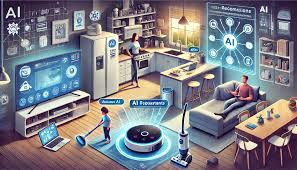
Artificial Intelligence (AI) has rapidly evolved from a futuristic concept into a tangible force that shapes our daily lives. What once existed only in science fiction is now embedded in smartphones, cars, homes, workplaces, and even in healthcare systems. AI is no longer a luxury or a specialized technology; it is an integral part of how we communicate, shop, travel, and make decisions. This article explores the pervasive presence of AI in everyday life, highlighting its applications, benefits, challenges, and potential future developments.
Understanding Artificial Intelligence
Artificial Intelligence refers to the ability of machines or software to perform tasks that typically require human intelligence. These tasks include learning from experience, recognizing patterns, understanding natural language, problem-solving, and making decisions. AI systems can be broadly categorized into three types:
- Narrow AI: Systems designed for specific tasks, such as voice assistants or recommendation algorithms.
- General AI: A theoretical form of AI that can perform any intellectual task a human can.
- Superintelligent AI: A future concept where AI surpasses human intelligence across all domains.
While we are mostly interacting with narrow AI today, its applications are already profoundly influencing our daily routines.
AI in Communication
One of the most visible impacts of AI is in the way we communicate. Smartphones, messaging apps, and social media platforms leverage AI to enhance user experiences. For example, AI-powered predictive text and autocorrect features make typing faster and more accurate. Chatbots on websites provide instant customer support, while AI-driven translation tools allow people from different linguistic backgrounds to communicate effortlessly.
Platforms like Google Translate can instantly translate spoken or written text, while social media algorithms curate content based on user preferences. These AI systems analyze vast amounts of data in real time to predict what content is most relevant, improving engagement and satisfaction.
AI in Healthcare
Healthcare is one of the most significant areas where AI is making a real difference. AI algorithms assist in diagnosing diseases more accurately and rapidly than traditional methods. For instance, AI systems can analyze medical images to detect early signs of cancer or other conditions that might be missed by human eyes.
Virtual health assistants powered by AI provide round-the-clock support, reminding patients to take medications, monitoring chronic conditions, and answering basic medical questions. Furthermore, AI plays a critical role in drug discovery, helping researchers identify potential treatments faster by analyzing complex biological data. This not only saves time but also reduces costs in medical research.
AI in Transportation
Transportation is another sector transformed by AI. Autonomous vehicles, although still in the testing and regulatory phase, rely heavily on AI to navigate safely. Self-driving cars use AI to process data from sensors, cameras, and GPS systems to make real-time decisions, avoid obstacles, and optimize routes.
Even for non-autonomous vehicles, AI enhances safety through features like lane departure warnings, adaptive cruise control, and collision detection. Ride-hailing services such as Uber and Lyft use AI to match drivers with passengers efficiently, predict demand, and reduce waiting times, making urban transportation smarter and more convenient.
AI in Daily Home Life
AI is increasingly present in our homes through smart devices. Smart speakers like Amazon Alexa or Google Home allow users to control lights, play music, and manage schedules using voice commands. Thermostats equipped with AI learn household routines and adjust temperatures automatically, optimizing energy consumption.
Even household appliances such as refrigerators, washing machines, and robotic vacuum cleaners now incorporate AI to improve efficiency. For example, AI-enabled refrigerators can track food inventory, suggest recipes based on available ingredients, and notify users about expiration dates. These innovations simplify daily chores and enhance convenience.
AI in Shopping and Entertainment
Retail and entertainment industries are heavily influenced by AI. E-commerce platforms like Amazon and eBay use AI algorithms to recommend products based on browsing history, preferences, and purchasing behavior. This personalization not only improves customer experience but also drives sales.
Streaming services such as Netflix and Spotify rely on AI to analyze viewing or listening patterns and suggest movies, shows, or songs that match user tastes. This predictive capability allows platforms to keep users engaged while providing a sense of personalization that feels almost human.
AI in Education
AI is also revolutionizing education by providing personalized learning experiences. Adaptive learning platforms assess a student’s strengths and weaknesses and tailor content accordingly. AI-powered tutoring systems can provide instant feedback, simulate real-life scenarios, and even detect when a student is struggling with a concept.
Language learning apps like Duolingo utilize AI to track progress and adjust lesson difficulty in real time. Moreover, AI helps educators manage administrative tasks, such as grading and attendance, allowing them to focus more on teaching and mentorship.
Benefits of AI in Everyday Life
The integration of AI in daily life offers several significant benefits:
- Efficiency: AI automates repetitive tasks, freeing humans to focus on complex problem-solving.
- Personalization: AI adapts experiences to individual preferences, from shopping to entertainment.
- Accuracy: AI reduces human error, particularly in healthcare, finance, and transportation.
- Accessibility: AI-driven tools help bridge gaps, such as language translation and assistive technologies for people with disabilities.
- Data-Driven Insights: AI analyzes massive datasets to provide actionable insights, helping businesses and individuals make informed decisions.
Challenges and Concerns
Despite its advantages, AI also presents challenges and ethical concerns.
- Privacy: AI systems often rely on personal data, raising concerns about data security and misuse.
- Bias: AI can inherit biases from training data, leading to unfair or discriminatory outcomes.
- Job Displacement: Automation powered by AI threatens certain job sectors, requiring workforce reskilling.
- Dependence: Over-reliance on AI can reduce human critical thinking and problem-solving skills.
- Security Risks: Malicious use of AI in cyberattacks or misinformation campaigns is an increasing concern.
Addressing these challenges requires careful regulation, transparent algorithms, and continuous monitoring to ensure that AI benefits society as a whole.
The Future of AI in Everyday Life
The future of AI promises even deeper integration into daily life. Emerging technologies like AI-powered augmented reality (AR) and virtual reality (VR) could transform how we learn, shop, and interact with the world. In healthcare, AI might predict diseases before symptoms appear, enabling preventative care on a global scale.
Smart cities, driven by AI, could optimize traffic, reduce energy consumption, and improve public services. Meanwhile, natural language processing and emotional AI could make human-machine interactions more intuitive, empathetic, and lifelike. The convergence of AI with robotics, IoT (Internet of Things), and quantum computing will likely redefine what is possible in everyday living.
Conclusion
Artificial Intelligence has shifted from a futuristic idea to a practical reality that touches nearly every aspect of our daily lives. From communication, healthcare, and transportation to home automation, shopping, education, and entertainment, AI enhances efficiency, personalization, and convenience. While it brings remarkable benefits, it also introduces challenges that society must address thoughtfully.
As AI continues to evolve, its role in shaping our daily experiences will only grow, offering opportunities to improve quality of life, solve complex problems, and create smarter, more connected communities. Embracing AI responsibly, with an awareness of both its potential and its pitfalls, will be key to thriving in a world increasingly influenced by intelligent machines.