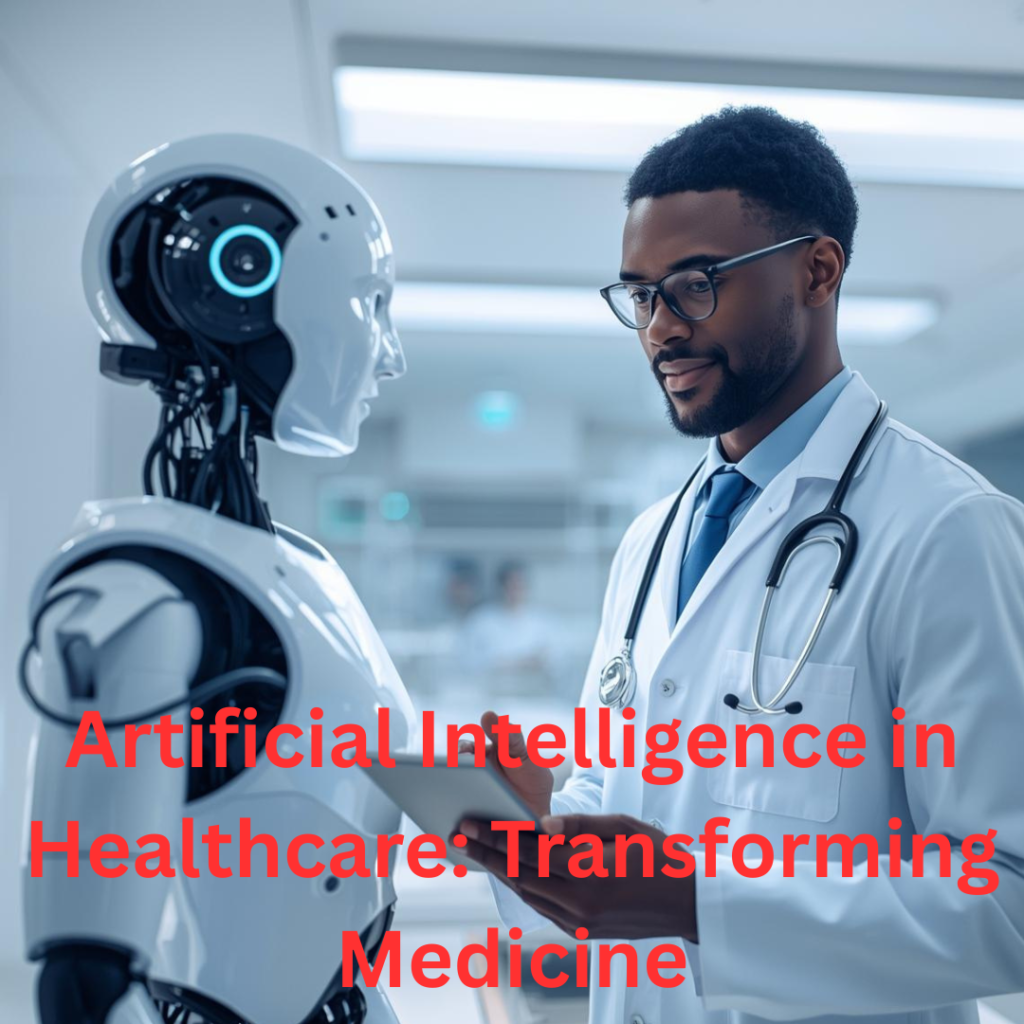
Artificial Intelligence (AI) is revolutionizing the healthcare industry by enhancing diagnosis, treatment, patient care, and operational efficiency. By leveraging machine learning, deep learning, natural language processing, and data analytics, AI enables healthcare providers to make faster, more accurate decisions while improving patient outcomes. From predictive analytics to robotic surgery, AI is reshaping medicine in ways previously thought impossible.
What Is Artificial Intelligence in Healthcare?
Artificial Intelligence in healthcare refers to the use of computer algorithms, software, and machines to simulate human intelligence and assist in clinical decision-making, patient management, and medical research. AI can analyze vast amounts of medical data, detect patterns, predict outcomes, and automate routine tasks, complementing human expertise.
AI in healthcare operates in multiple domains:
- Diagnostics: Identifying diseases using imaging, lab tests, and genetic information.
- Treatment Planning: Recommending personalized therapies and medication.
- Patient Monitoring: Continuous tracking of vital signs and health metrics.
- Operational Efficiency: Automating administrative tasks to reduce errors and costs.
Key Technologies Enabling AI in Healthcare
- Machine Learning (ML): Algorithms learn from medical data to predict disease, treatment responses, and patient outcomes.
- Deep Learning: A subset of ML, especially effective in analyzing medical images such as X-rays, MRIs, and CT scans.
- Natural Language Processing (NLP): Extracts meaningful information from clinical notes, research papers, and electronic health records (EHRs).
- Robotics: AI-driven robots assist in surgeries, rehabilitation, and logistics within healthcare facilities.
- Predictive Analytics: Analyzes historical patient data to forecast disease outbreaks, readmissions, or complications.
- Computer Vision: Recognizes patterns in medical images, dermatology scans, and pathology slides.
- Virtual Assistants and Chatbots: Support patient engagement, reminders, and telemedicine interactions.
Applications of AI in Healthcare
1. Disease Diagnosis and Detection
- AI algorithms can analyze medical images for early detection of cancer, heart disease, and neurological disorders.
- Example: Deep learning systems detecting diabetic retinopathy or lung nodules from scans with high accuracy.
- AI helps reduce diagnostic errors and accelerates treatment planning.
2. Personalized Medicine
- AI can recommend treatments tailored to a patient’s genetic makeup, medical history, and lifestyle.
- Precision medicine enhances the effectiveness of therapy and minimizes side effects.
3. Drug Discovery and Development
- AI accelerates drug discovery by predicting molecular behavior and identifying potential drug candidates.
- Reduces the cost and time required for clinical trials.
4. Predictive Analytics and Risk Assessment
- AI predicts patient risk for diseases like diabetes, heart failure, or sepsis.
- Hospitals can prioritize high-risk patients and intervene earlier, improving survival rates.
5. Virtual Health Assistants and Telemedicine
- AI-powered chatbots provide basic healthcare guidance, medication reminders, and triage.
- Virtual assistants enable continuous monitoring and reduce hospital visits.
6. Robotic Surgery
- Robots guided by AI perform minimally invasive procedures with high precision.
- Benefits include reduced recovery time, smaller incisions, and improved surgical outcomes.
7. Administrative and Operational Efficiency
- AI automates scheduling, billing, and documentation, reducing clerical errors.
- Optimizes hospital workflow and resource allocation.
8. Mental Health and Behavioral Analysis
- AI analyzes speech, text, and physiological data to detect signs of depression, anxiety, or cognitive decline.
- Supports therapists in early intervention and personalized care.
Benefits of AI in Healthcare
- Improved Accuracy: Reduces diagnostic errors and improves early detection.
- Faster Decision-Making: Analyzes large datasets in seconds, accelerating treatment.
- Cost Reduction: Optimizes resource allocation and minimizes unnecessary tests or hospital stays.
- Patient-Centered Care: Supports personalized medicine and tailored treatment plans.
- Enhanced Accessibility: Telemedicine and AI-driven virtual assistants expand access to healthcare services.
- Continuous Monitoring: Wearables and AI systems track patient health in real-time.
- Accelerated Research: AI shortens the drug discovery cycle and clinical trial processes.
Challenges and Limitations
- Data Privacy and Security: Handling sensitive patient data requires strict compliance with regulations such as HIPAA and GDPR.
- Bias in AI Models: Algorithms trained on biased or incomplete data may produce inaccurate results.
- Integration with Existing Systems: Adapting AI solutions to legacy EHRs and workflows can be complex.
- High Implementation Costs: Advanced AI systems, infrastructure, and training are expensive.
- Regulatory Approval: AI-based tools must meet stringent medical device regulations before deployment.
- Dependence on Quality Data: Poor data quality can lead to unreliable predictions or recommendations.
- Ethical Concerns: Issues like decision-making transparency and liability in AI-driven diagnosis remain critical.
Future Trends of AI in Healthcare
- Explainable AI (XAI): Developing transparent AI systems that clinicians can understand and trust.
- Integration with Wearables and IoT: Continuous data from smartwatches, sensors, and connected devices will improve real-time patient monitoring.
- AI in Genomics: Personalized treatments based on genomic sequencing and predictive modeling.
- Global Telemedicine Expansion: AI-powered telehealth platforms will bridge gaps in rural and underserved areas.
- Smart Hospitals: AI-driven operations for patient flow, inventory management, and emergency response.
- Mental Health AI: Advanced emotion detection and behavioral analysis will improve mental health interventions.
- Hybrid Human-AI Collaboration: Clinicians and AI working together to enhance diagnosis, treatment, and patient outcomes.
Conclusion
Artificial Intelligence is transforming healthcare from diagnosis and treatment to patient management and hospital operations. By leveraging AI technologies like machine learning, deep learning, natural language processing, and robotics, the healthcare industry can improve accuracy, efficiency, and accessibility.
While challenges such as data privacy, bias, and high costs remain, continued innovation and integration of AI with IoT, genomics, and telemedicine promise a future where healthcare is more precise, proactive, and patient-centric. AI is not replacing doctors; instead, it serves as a powerful ally, enhancing human decision-making and enabling better health outcomes for all.