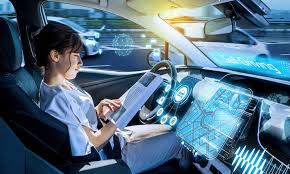
The era of self-driving cars, also known as autonomous vehicles (AVs) or driverless cars, is transforming transportation. These vehicles use cutting-edge technologies such as artificial intelligence (AI), sensors, machine learning, and connectivity to navigate roads with minimal or no human input. By promising safer roads, increased mobility, and reduced congestion, self-driving cars are poised to revolutionize how we live, work, and travel.
What Are Self-Driving Cars?
A self-driving car is a vehicle capable of sensing its environment and operating without human control. Unlike conventional vehicles, which rely entirely on human drivers, autonomous cars can:
- Detect obstacles, traffic signals, and pedestrians
- Make real-time driving decisions
- Navigate complex urban and highway environments
- Communicate with other vehicles and infrastructure
These vehicles rely on a combination of technologies, including LiDAR, radar, GPS, cameras, and AI-powered software to perceive the environment and make safe driving decisions.
Levels of Driving Automation
The Society of Automotive Engineers (SAE) classifies autonomous vehicles into six levels (0–5):
- Level 0 – No Automation: Full human control; the driver is responsible for all tasks.
- Level 1 – Driver Assistance: Single automated system, like cruise control or lane keeping.
- Level 2 – Partial Automation: Vehicle can control steering and acceleration simultaneously, but the driver must monitor the environment.
- Level 3 – Conditional Automation: The vehicle manages most driving tasks but may request human intervention.
- Level 4 – High Automation: Cars can drive themselves in specific conditions or areas without human input.
- Level 5 – Full Automation: Fully autonomous in all environments, no human intervention needed.
Currently, most commercially available vehicles are Level 2, with Level 4 systems being tested for ride-hailing and shuttle services. Level 5 vehicles remain under development.
Key Technologies in Autonomous Vehicles
Autonomous vehicles integrate several advanced technologies:
1. Sensors and Cameras
Sensors like LiDAR (Light Detection and Ranging) and radar map the environment in 3D, detecting obstacles and measuring distance. Cameras detect lane markings, traffic signs, pedestrians, and other vehicles.
2. GPS and Mapping Systems
High-precision GPS enables vehicles to know their exact location. Combined with detailed digital maps, AVs can plan optimal routes and anticipate road conditions.
3. Artificial Intelligence and Machine Learning
AI algorithms process sensor data to make driving decisions, such as braking, accelerating, and turning. Machine learning helps vehicles improve over time by learning from previous experiences.
4. Vehicle-to-Everything (V2X) Communication
V2X allows AVs to communicate with other vehicles, traffic infrastructure, and cloud systems. This improves traffic flow, reduces accidents, and enables cooperative driving strategies.
5. Control Systems
Electronic control units execute driving commands, controlling steering, braking, and acceleration. Advanced software ensures smooth and safe operation.
Applications of Self-Driving Cars
Autonomous vehicles have applications across multiple sectors:
1. Personal Transportation
Self-driving cars provide convenience for individuals, particularly for those who cannot drive, such as the elderly or people with disabilities.
2. Ride-Hailing Services
Companies like Waymo and Cruise are testing autonomous taxis, reducing the need for human drivers and improving urban mobility.
3. Logistics and Freight
Autonomous trucks can transport goods over long distances more efficiently, reducing driver fatigue and improving supply chain reliability.
4. Public Transport
Autonomous buses and shuttles offer cost-effective, safe, and eco-friendly transportation in urban areas.
5. Emergency and Military Vehicles
Self-driving technology can be used in emergency medical transport and defense, reducing risk to human personnel in hazardous environments.
Benefits of Autonomous Vehicles
- Improved Road Safety: Autonomous systems can reduce human errors, which cause the majority of traffic accidents.
- Increased Mobility: Provides transportation for people unable to drive, improving accessibility.
- Reduced Traffic Congestion: Smart routing and communication between vehicles optimize traffic flow.
- Lower Emissions: Electric autonomous vehicles, combined with efficient driving, can reduce fuel consumption and pollution.
- Economic Efficiency: Reduces costs related to accidents, insurance, and driver labor.
Challenges and Limitations
Despite their potential, self-driving cars face several challenges:
- Technical Complexity: Navigating unpredictable conditions, such as bad weather, road construction, or erratic drivers, is challenging.
- Cybersecurity Risks: AVs are vulnerable to hacking, requiring robust cybersecurity measures.
- Legal and Regulatory Issues: Liability in accidents involving AVs remains a major concern.
- Ethical Dilemmas: Decision-making in unavoidable accident scenarios raises moral questions.
- High Costs: Developing and deploying autonomous systems remains expensive.
Future of Self-Driving Cars
The future of autonomous vehicles promises transformative changes:
- Integration with Smart Cities: AVs will communicate with traffic systems, streetlights, and other vehicles to improve urban mobility.
- Electric and Autonomous Synergy: Most AVs are expected to be electric, reducing environmental impact.
- AI Advancements: More advanced AI will enable safer and fully autonomous vehicles in complex environments.
- Shared Mobility Models: Widespread adoption of autonomous taxis and shuttles will reduce car ownership.
- Regulatory Evolution: Governments are likely to establish frameworks to ensure safety, ethics, and privacy.
Conclusion
Self-driving cars and autonomous vehicles are not just a technological novelty—they represent the future of transportation. By combining AI, sensors, and connectivity, these vehicles promise to make roads safer, reduce congestion, lower emissions, and improve accessibility. While technical, ethical, and regulatory challenges remain, ongoing innovation and testing continue to move AVs closer to mainstream adoption.
The coming decades will likely see a world where autonomous vehicles are a common sight, transforming not only how we travel but also how cities are designed, logistics are managed, and mobility is experienced globally.